PHASE 2 – DESIGN
Stage 8: Co-Design Facilitation
What may appear as an obvious problem with a clear solution is rarely the case when bringing groups together to advance a cause. Sharing information leads to different interpretations and even more diverse suggestions about priorities. It would be easy to ignore this messy, fragmented reality. Most projects do. That is why so many projects fail!
The process of bringing a group to agreement involves active facilitation. That is the focus of this stage. Working through this stage should reveal to every stakeholder, project manager, sponsor and participant that their knowledge is incomplete and enriched by working with others. It will also reveal how working together is not natural. Having a workshop plan and a process to support that plan is vital. This stage will provide the tools to bring that plan to life.
Go to Stage 8 Content


Co.Design4All
3 Stages of Design









So within the Design Phase, there are three Stages; each underpinned by a total of 34 tools. Some of those tools will be re-used throughout this and other Phases. It is your choice as to when they are introduced and how often they are re-used.
Stage 6
RECRUITMENT
This stage involves the recruitment of participants for the co-design process. It includes the invitations and briefings required to ensure stakeholders are informed and prepared to participate.
4
Tools

Stage 7
CO-DESIGN SENSITIZING
This is the first phase in the co-design workshopping. It involves sensitizing stakeholders to the issue by providing the information gathered in the Discovery Phase. It means reporting on key findings, highlighting ideas raised and potential solutions.
8
Tools
Stage 8
CO-DESIGN FACILITATION
This is the second component of the co-design workshop or series of workshopping activities. Core to this stage is the facilitation of activities to ensure participants develop and test ideas and solutions which address real needs. The central purpose of the facilitator is to drive shared clarity and common commitment to the ideas which are prioritised in a transparent and informed way.
22
Tools
Gate 2 – REFLECT & PLAN
The reflect and plan component of the framework has been designed to provide a point to review what has been achieved. Based on this review process a decision can be made about whether the project should continue or if it needs to re-circle and refine some core outputs. A plan for the next stage of implementing the toolkit will result, perhaps strengthened by re-working which occurs as a result of the reflection process. The reflection will be guided by answering questions about the sufficiency of the outcomes achieved. It will also encourage questioning about the basis of how decisions were reached to ensure real co-design has occurred.

Reflect & Plan
DESIGN
Stage 8 – Co-Design Facilitation




Overview
This is the second component of the co-design workshop or series of workshops. The focus is to enable participants to develop and test ideas and solutions against success criteria established earlier in the process.
Key Activities
By this stage of the process, the group should be seeing themselves as a project team. Their identity will be associated with addressing the key challenge which data and consultation have pointed to. Facilitation of co-design will include the following steps:
- Presenting the ideas and solutions that have been proposed by stakeholders, or applied in different contexts relevant to this challenge. Individually participants assess the ideas using the feedback grid.
- The group then discuss their thoughts on each of the solutions. Additional ideas or new thoughts might emerge which need to be considered in line with previous discussions. The group decide on solutions that they will take forward to the broader workshop or stakeholders. They will need to plan a pitch to the workshop group on the benefits of their solution.
- As a group they will discuss, build and add to the ideas. Participants will then determine which ideas they prefer. This can occur through a variety of means depending upon the group size and maturity. It might involve an open discussion or a mediated voting process. The facilitator needs to have a plan for how to engage the group in such decisions. This should be informed by the tools available and the group dynamics.
- It is likely that during this phase individuals will start to dominate or conflict arise. This is the “storming” phase of the group. There are a number of tools that can help with managing these situations so that the group moves to a more productive norm.
Stage Tools
STAGE 8 – Co-Design Facilitation
Appreciative Inquiry to Develop Ideas
Appreciative Inquiry to Develop Ideas
Tool Reference # 2D0801
Local knowledge and commitment are vital for generating useful and creative ideas which address the root cause of problems. Rather than focus on the deficits within the community of interest, the facilitator focusses on the strengths and local assets available when using the 4D Model. They encourage the group to collectively build on this core with new solutions. Identifying the positives about what is happening right now rather than being burdened by the challenges created by history is empowering. Appreciative Inquiry is positive and imaginative. It helps leverage existing resources and initiatives for greater impact.
There are numerous videos and resources available online to support facilitators use this strengths based approach. Its advantage is the model is inclusive, consensual and positive which can change the dynamics in the room.

WHAT
This is a co-design approach using a well developed group input model.

WHO
Workshop participants.

HOW LONG
2 hours +

Stage 8 – Appreciative Inquiry to Develop Ideas
There are numerous videos and resources available online to support facilitators use this strengths based approach. Its advantage is the model is inclusive, consensual and positive which can change the dynamics in the room.
You need to purchase subscription.
STAGE 8 – Co-Design Facilitation
Triad
Triad
Tool Reference # 2D0802
Many meetings fail because those who think on their feet or have positional power dominate proceedings. This exercise gets everyone involved in a group of three. This is much less intimidating. By revolving through speakers, the triad model enables less confident speakers to step into the conversation. The physical proximity of the exercise also seeds new groups and trust across the participating community. Finally, in small groups the challenge of listening is laid bare. Everyone comes away humbled by the difficulty of saying what they mean and listening as long as required to understand what is being said.
WHAT
This is activity helps participants to actively listen and to realise how their messages can be interpreted. It improves communication clarity and trust within the group.
WHO
Workshop participants.
HOW LONG
20 minutes
Stage 8 – Triad
This exercise gets everyone involved in a group of three. By revolving through speakers, the triad model enables less confident speakers to step into the conversation.
You need to purchase subscription.
STAGE 8 – Co-Design Facilitation
Publish – Circle – Refine
Publish-Circle-Refine
Tool Reference # 2D0803
Brainstorming activities can create momentum which undermines good thinking. The Publish-Circle-Refine method slows down the generation of ideas. It is based on the concept that more heads are better than one. Creating space for others to reflect on your ideas and make them better means that any idea has passed through many hands before it is adopted. This means the idea is improved in the quieter space of team review. It is also never truly attributable to just one source as a series of thinkers has enhanced the initial idea. For that reason, it is easier for the group to embrace the outputs with collective ownership.
WHAT
This is a useful tool for defining the problem statement before brainstorming.
WHO
Workshop participants.
HOW LONG
20 minutes.
Stage 8 – Publish: Circle: Refine
Brainstorming activities can create momentum which undermines good thinking. The Publish-Circle-Refine method slows down the generation of ideas. It is based on the concept that more heads are better than one.
You need to purchase subscription.
STAGE 8 – Co-Design Facilitation
1, 2, 3, 4 More
1, 2, 3, 4 More
Tool Reference # 2D0804
Many people are reflective thinkers. That means their best ideas are generated when alone. This tool provides you with guidance on how to get participants generating their own ideas and then sharing and comparing them with others. The best ideas are then prioritised at a table level. Tables then share their best ideas with the wider group. The process means ideas can be paired, eliminated or highlighted with less embarrassment for the idea originator.
The approach can also generate more ideas in a compressed timeframe. If you need to take turns generating ideas, it can take a long time to get through everyone’s contributions. You might even lose some people to boredom. By working alone, together, as a table and then as a group you can create and distil more ideas in the time available and keep everyone’s attention.
WHAT
This is an inclusive activity which ensures everyone is heard and the outcomes positive and solution focused.
WHO
Workshop participants.
HOW LONG
15 minutes.
Stage 8 – 1, 2 ,3 ,4 More
This tool provides you with guidance on how to get participants generating their own ideas and then sharing and comparing them with others.
You need to purchase subscription.
STAGE 8 – Co-Design Facilitation
Brain Write
Brain Write
Tool Reference # 2D0805
This tool uses sticky notes and independent thinking to stimulate creativity in others. By writing a minimum of three ideas, one per sticky note, in relation to a question, you multiply the base load of available inputs within just a couple of minutes. These sticky notes are then passed to the next person, generating lots of creative inspiration for others. This inspiration is in turn clustered by participants around themes as sticky notes can be so easily re-organised. A report by table can then be easily generated for the wider group.
WHAT
This is a brainstorming activity that can help to generate many ideas in a short time.
WHO
Workshop participants
HOW LONG
10 mins
Stage 8 – Brain Write
This tool uses sticky notes and independent thinking to stimulate creativity in others.
You need to purchase subscription.
STAGE 8 – Co-Design Facilitation
Nominal Group Technique
Nominal Group Technique
Tool Reference # 2D0806
People can be intimidated when offering ideas if their suggestion is questioned or critiqued in the next breath. This approach gets individuals to generate a list of suggestions and then share them in turn as the facilitator goes around the room. Everyone’s ideas are put on display. Ideas stimulated by seeing other’s ideas can also be added as the process only stops when time is up or the group runs out of ideas. With the ideas on display the group can then vote ideas in or out so that clear favourites emerge.
WHAT
This is a brainstorming activity that can help to generate many ideas in a short time, and allow for ranking of those ideas.
WHO
Workshop participants.
HOW LONG
25 mins
Stage 8 – Nominal Group Technique
This approach gets individuals to generate a list of suggestions and then share them in turn as the facilitator goes around the room.
You need to purchase subscription.
STAGE 8 – Co-Design Facilitation
BARRRR
BARRRR
Tool Reference # 2D0807
There is no new problem and some would say no new solution which someone else has not thought of! The BARRRR technique takes an existing solution and asks attendees to make elements of that service or idea bigger and better. It also asks whether the current approach just needs an addition to be improved. Finally, the order in which things are done is considered to see if that will generate better outcomes. The participants are familiar with the service or solution so can find it easy to enhance it by tweaking how it works. Making known things better is far easier than generating entirely new solutions.
WHAT
This is a brainstorming activity that can help to generate many ideas and build on or reshape existing ideas.
WHO
Workshop participants.
HOW LONG
20 minutes (depending on the number of ideas and extent of conversation).
Stage 8 – BARRRR
The BARRRR technique takes an existing solution and asks attendees to make elements of that service or idea bigger and better.
You need to purchase subscription.
STAGE 8 – Co-Design Facilitation
Tournament Prioritizing
Tournament Prioritizing
Tool Reference # 2D0808
Most workshops are full of good ideas. What is far harder is to prioritise in a transparent fashion. Tournament Prioritising, forces participants to make choices between no more than two alternatives at a time using the whiteboard as the visual filter. Through whittling down options the ideal number of activities to consider can then become the focus of discussion.
WHAT
This is a brainstorming activity that can help to generate many ideas in a short time, and allow for filtering of those ideas based on best fit.
WHO
Workshop participants.
HOW LONG
20 mins
Stage 8 – Tournament Prioritizing
Tournament Prioritising, forces participants to make choices between no more than two alternatives at a time using the whiteboard as the visual filter.
You need to purchase subscription.
STAGE 8 – Co-Design Facilitation
Lotus Blossom
Lotus Blossom
Tool Reference # 2D0809
Creating ideas based on a design challenge should involve consideration of what “good” looks like. The Lotus Blossom technique involves creating a flowering of ideas by putting the design challenge at the centre. Key considerations are the next thing documented, like the first petals in a flower. Ideas are then generated around those centrepieces until the flower is in full bloom.
WHAT
This is a brainstorming activity that can help to generate many ideas in a short time, and to build on other’s ideas
WHO
Workshop participants
HOW LONG
30 mins
Stage 8 – Lotus Blossom
The Lotus Blossom technique involves creating a flowering of ideas by putting the design challenge at the centre.
You need to purchase a subscription.
STAGE 8 – Co-Design Facilitation
Think: Pair: Share
Think: Pair: Share
Tool Reference # 2D0810
This activity starts with individual thinking. The outputs are then shared with a partner. The combined logic discussed between that pair is then shared with the wider group. This activity works well with smaller groups where tables of participants are not present.
WHAT
This is a brainstorming activity that can help to generate ideas and allow participants to build on each other’s idea.
WHO
Workshop participants
HOW LONG
30 mins
Stage 8 – Think: Pair: Share
The combined logic discussed between that pair is then shared with the wider group. This activity works well with smaller groups where tables of participants are not present.
You need to purchase subscription.
STAGE 8 – Co-Design Facilitation
Outcomes Framework
Outcomes Framework
Tool Reference # 2D0811
This tool involves educating participants about the differences between inputs, outputs and outcomes. It asks participants to focus on the outcomes which are important to address the problem the group has defined. Through lifting the horizon to outcomes, those who own or deliver certain inputs are less threatened as the conversation centres on the end result required. Measures of what that outcome should be are discussed, enabling the group to then assess any ideas generated in the workshop against whether they will contribute to achieving the outcomes desired.
WHAT
This framework can be used to define the desired or expected outcomes from the options examined.
WHO
Workshop participants
HOW LONG
1 hour
Stage 8 – Outcomes Framework
This tool involves educating participants about the differences between inputs, outputs and outcomes.
You need to purchase subscription.
STAGE 8 – Co-Design Facilitation
Patient Journey Mapping
Patient Journey Mapping
Tool Reference # 2D0812
Service delivery involves many touch points. For patients, health systems are complex starting with booking appointments, arriving, seeing clinicians, getting a referral, performing tests, getting results and perhaps a diagnosis or another referral. Those involved in these many transitions can lose sight of what goes before and what comes next.
Journey mapping is powerful as it puts the entire process down in a manner which can be reviewed. Most importantly, the stories of individuals for whom the process has not worked can be told highlighting where on the journey things were missed. The power of seeing a process from the perspective of a service user who has been injured or not served can be a powerful reminder to a group about why they are gathered to generate new solutions. The same process can be used in any sector which has clients.
WHAT
This is a tool that can be used to better understand the impact of a service on patients and the barriers and enablers to making that service more accessible, appealing or efficient to deliver.
WHO
Workshop participants
HOW LONG
This can take weeks to months depending on the depth applied
Stage 8 – Patient Journey Mapping
Journey mapping is powerful as it puts the entire process down in a manner which can be reviewed.
STAGE 8 – Co-Design Facilitation
Round Robin
Round Robin
Tool Reference # 2D0813
The Round Robin process involves speaking your idea out loud and then passing the turn to the next person. It is inherently democratic as everyone gets to contribute to the Round Robin. It can be done in a couple of variants depending upon the size of the group.
WHAT
This is an approach to brainstorming which gets everyone talking. The method ensures everyone gets to take a turn, helpful if taming large personalities.
WHO
Workshop participants
HOW LONG
20 mins
Stage 8 – Round Robin
The Round Robin process involves speaking your idea out loud and then passing the turn to the next person.
You need to purchase subscription.
STAGE 8 – Co-Design Facilitation
SCAMPER
SCAMPER
Tool Reference # 2D0814
This tool asks participants what can be substituted, combined, amplified, modified, put to another use, eliminated or reversed in relation to a service design or idea. It forces people to comprehensively review a service to improve efficiency and effectiveness; critical for getting better outcomes.
WHAT
This is a brainstorming activity that can help to consider alternatives and build on existing solutions
WHO
Workshop participants
HOW LONG
30 mins
Stage 8 – SCAMPER
This tool asks participants what can be substituted, combined, amplified, modified, put to another use, eliminated or reversed in relation to a service design or idea.
You need to purchase a subscription.
STAGE 8 – Co-Design Facilitation
Hot Potato
Hot Potato
Tool Reference # 2D0815
Hot Potato is a great technique to use when energy in a room is declining. It gets people on their feet. They move at will between sheets of paper which outline a topic, idea or problem. They contribute to that sheet before moving to the next. If energy is low you can time the changeovers to create tension and excitement. If everyone is engaged and you just want great contribution, you can allow people to stay at a task for as long as they have ideas to contribute.
WHAT
This is a brainstorming activity that can help to generate many ideas in a short time, and allow for building on other’s ideas across a number of topics.
WHO
Workshop participants
HOW LONG
30 mins
Stage 8 – Hot Potato
Hot Potato is a great technique to use when energy in a room is declining. It gets people on their feet.
You need to purchase subscription.
STAGE 8 – Co-Design Facilitation
Feedback Grid
Feedback Grid
Tool Reference # 2D0816
Every idea can be improved. It might not be liked by everyone. The feedback grid can be used to generate anonymous or named feedback about a proposal. It asks respondents to note what they like, what could be improved, list any questions or contribute new ideas. By containing the information on a card, it enables lots of feedback to be generated in a short space of time across a wider variety of ideas.
WHAT
This is a feedback process that can be used to assess options/ideas.
WHO
Workshop participants
HOW LONG
5 mins
Stage 8 – Feedback Grid
The feedback grid can be used to generate anonymous or named feedback about a proposal. It asks respondents to note what they like, what could be improved, list any questions or contribute new ideas.
You need to purchase subscription.
STAGE 8 – Co-Design Facilitation
The Test Card
The Test Card
Tool Reference # 2D0817
Implementing new ideas should involve a series of tests or pilots. That means for each test you need to know what data you want to collect and what you are trying to prove. The Test Card enables the pilot owner to outline what each test is aiming to gather data about. Once the test is over, the hypothesis or point of the test can be analysed and improvements made before the product or service moves to the next stage of piloting.
WHAT
The Test Card can be integrated across several phases to systematically test assumptions and validate the solutions being developed.
WHO
Project team and other stakeholders involved in delivery of the co-design session/s.
HOW LONG
30 – 60 minutes.
Stage 8 – The Test Card
The Test Card enables the pilot owner to outline what each test is aiming to gather data about.
You need to purchase subscription.
STAGE 8 – Co-Design Facilitation
Team Progress Agenda
Team Progress Agenda
Tool Reference # 2D0818
Project teams need to have a tight agenda which enables them to clarify key deliverables, reflect, coordinate and manage workload. This tool outlines a standard project team meeting agenda. Most importantly, one of the agenda items is “what can we drop”. Too often teams become overburdened with work because they keep doing things which should have been stopped or deferred. Creating space for the new things they need to do will enable creativity and better implementation.
WHAT
Tool designed to keep teams focused on their key deliverables, identify roadblocks, and foster collaboration. Each section encourages individual accountability while also seeking opportunities for cross-team synergies, continuous learning, and improvement.
WHO
Project team and other stakeholders involved in delivery of the co design session/s.
HOW LONG
45 – 60 minutes.
Stage 8 – Team Progress Agenda
This tool outlines a standard project team meeting agenda. Most importantly, one of the agenda items is “what can we drop”.
STAGE 8 – Co-Design Facilitation
HMFT Matrix
HMFT Matrix
Tool Reference # 2D0819
This matrix enables groups to outline what their hopes are for a given project. It asks them to discuss the myths and legends which are associated with the work. It elicits discussion of their fears and gets on the table the list of taboos associated with the work. The use of this matrix in a group setting gets some of the elephants in the room out in open discourse. It is structured to be positive and negative by also asking the group to nominate legends and other inspiration alongside their hopes. The facilitator can then work with the group to dig into how much of this is real or just perceived. This can unblock paths before they become a problem.
WHAT
This matrix facilitates understanding of participants’ perspectives by prompting reflection on their expectations, past achievements, concerns, and underlying assumptions. It enhances group dynamics and encourages improved collaboration through transparent communication and addressing unspoken issues.
WHO
Project team and other stakeholders involved in delivery of the co design session/s.
HOW LONG
15 – 30 Minutes.
Stage 8 – HMFT Matrix
This matrix enables groups to outline what their hopes are for a given project. It asks them to discuss the myths and legends which are associated with the work. It elicits discussion of their fears and gets on the table the list of taboos associated with the work.
You need to purchase a subscription.
STAGE 8 – Co-Design Facilitation
GROSS Check
GROSS Check
Tool Reference # 2D0820
A tool for checking whether legacy ideas, systems, even personal preferences have been hung onto past their use by date.
WHAT
A group process is used to generate ideas for system improvement.
WHO
Workshop attendees.
HOW LONG
10 minutes.
Stage 8 – GROSS Check
A tool for checking whether legacy ideas, systems, even personal preferences have been hung onto past their use by date.
You need to purchase a subscription.
STAGE 8 – Co-Design Facilitation
One Conversation Reflections
One Conversation Reflections
Tool Reference # 2D0821
A tool for helping groups form. It reminds attendees that wisdom and insight come from all sorts of quarters and unexpectedly.
WHAT
A group activity to get people sharing what made them who they are.
WHO
Workshop attendees.
HOW LONG
15 minutes.
Stage 8 – One Conversation Reflections
A tool for helping groups form. It reminds attendees that wisdom and insight come from all sorts of quarters and unexpectedly.
You need to purchase subscription.
STAGE 8 – Co-Design Facilitation
Collective Voices
Collective Voices
Tool Reference # 2D0822
Change occurs when people get engaged. Finding the people who will align with your problem can involve getting out at a grass roots community level.
WHAT
A tool which helps identify how to get wider community engagement.
WHO
The project facilitator.
HOW LONG
10 minutes.
Stage 8 – Collective Voices
Change occurs when people get engaged. Finding the people who will align with your problem can involve getting out at a grass roots community level.
You need to purchase a subscription.
NEED HELP?
Support & Guidance
Bringing groups together means creating an environment for effective exchange. There are many tools which can make discussions more useful and build connections faster. Knowing when to use which tool is an art rather than a science. Experience can be key to interpreting and responding to what is going on in your workshop or meeting. We are available to help you plan and deliver your co-design workshops.



CO.DESIGN4ALL
Get in Touch With Us
Please choose the subject of your enquiry from the drop-down selection. We look forward to engaging with you on Co.Design4All.
CASE STUDY
“Keeping Kidneys” Project
Specialist physicians can be very strong and confident types. Put Professor in front of anyone’s name and give them the power of life and death and it is not surprising they can be very confident and even condescending when dealing with others. This was the case with the “Keeping Kidneys” project. Inala Primary Care’s general practitioners had identified a need for more support to care for the growing number of patients with falling renal function. Diabetes, ageing, cardiovascular disease and other water borne pathogens can all affect how well kidneys function. It is impossible to imagine a world where all kidney health is dealt with by hospital based Nephrologists…yet their call was simply for more specialists to be hired to do the work. With new pathology tests available our group tried to engage hospital colleagues in designing a new model of care. Early in the process some insulting claims were made like “a GP could not possibly understand what I do”. Rather than engage in meetings where power would be rife, we chose to run a series of workshops to present data on the burning platform, develop the need, collaborate around a response and plan for better care delivery. It was important that we used tools which enabled individuals to do their own thinking before sharing it with the group to diffuse the politics involved. It was also important to create an environment where everyone built in each other’s ideas. Using a series of facilitated sessions this was possible and shared commitment created to the new proposal which was ultimately piloted and scaled up.
Hire Us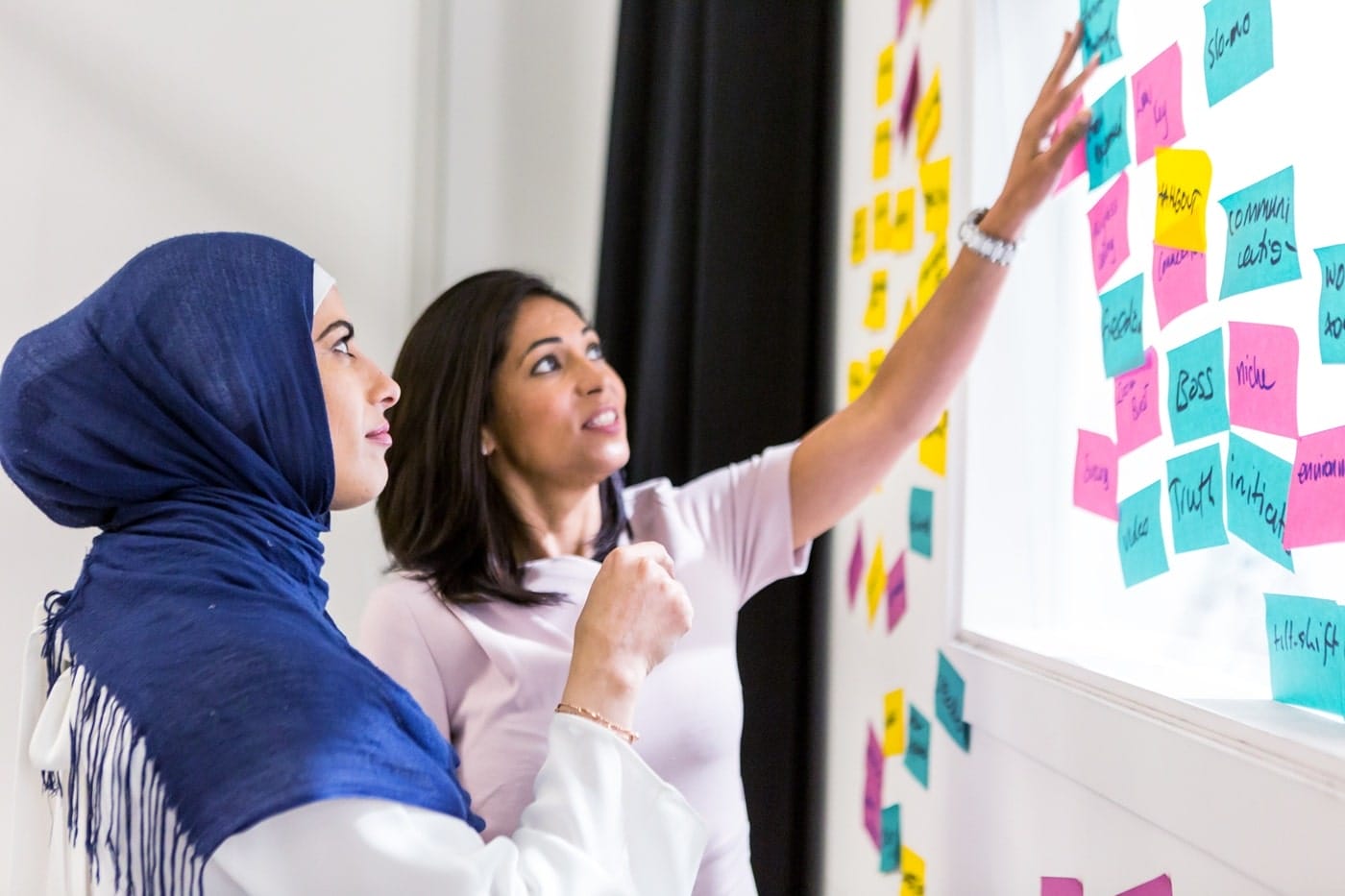
TESTIMONIALS
What our clients have to say

Tracey Silvester
Executive Officer
Engaging, Successful, Credible
I have been witness to Tracey Johnson’s knowledge of the health care system and her exceptional group facilitation skills. She is a master at understanding the complexities in which health services operate; an understanding that is reflected in the quality of the co-design tools and resources that have been developed. Her ability to clearly communicate complex concepts and engage diverse audiences ensures the success and credibility of her work. I am confident that these attributes and Tracey’s commitment to making a difference will make the website a valuable resource for all users.
McGrath ‘Model of Care’ project
Project Participant A
Best Co-design Process
This has been the best co-design process I have even participated in……ACTUAL co-design.
Meredith Cummins
CEO Neuroendocrine Cancer Australia
Wonderful Co-design Workshop
Wonderful to be involved in this co-design workshop to ensure the model of care for all cancers benefits all cancers.
McGrath ‘Model of Care’ project
Project Participant B
Fantastic Co-design Workshop
Fantastic to have been part of the codesign workshop with McGrath Foundation and Natasha Doherty.
Stacey Allerton
Patient Advocate
Compassionate Co-Design
Thank you to Natasha Doherty for a kind and compassionate session co-designing the McGrath Foundation model of nursing care for all cancers!
Cathy Baynie
Practice Consultant & Past President AAPM
Highly Recommend Co.Design4All
I highly recommend this resource as the necessary tool that will support and foster the needs of all stakeholders in the co-design process. Tracey and Nat have an in depth and lived understanding of what is required for a successful outcome. Their skills in working with groups and inspiring others are second to none.
Cathy Baynie, Registered Nurse. Practice Consultant & Past President AAPM (Australian Assoc of Practice Managers) Manager Advocacy and Health Workforce
Michele Smith
WNSWPHN
Excellent Co-Design – Resounding Success
The “Excellent Co-Design” training by Tracey Johnson and Natasha Doherty has been a resounding success. It not only enriched the skill set of the WNSW PHN Primary Care team but also instilled a culture of collaboration and innovation that will propel the PHN’s mission to improve primary health outcomes.
Freddy Ortega
WNSW PHN Primary Care Team
Transformative, Comprehensive Training
The “Excellent Co-Design” training, expertly delivered by Tracey Johnson and Natasha Doherty, has been transformative for the WNSW PHN Primary Care Team. This comprehensive training has equipped the team with vital skills in community engagement, service innovation, and program implementation—key components for addressing complex primary care challenges, especially in rural and remote contexts
Tracey Silvester
Executive Officer ACHSM
Quality Tools & Resources
Tracey Johnson is a master at understanding the complexities in which health services operate, an understanding that is reflected in the quality of the codesign tools and resources that have been developed. I am confident that these attributes and Tracey’s commitment to making a difference will make the Co.Design4All website a valuable resource for all users.
insights and thought leadership
Our Latest Articles & Blogs
Lorem ipsum dolor sit amet consectetur. Viverra nulla lectus justo cras mauris viverra. Risus facilisis nam id viverra dui elit in sodales in. Scelerisque iaculis suspendisse diam gravida. Aliquam tincidunt

Fix the Ride, Not the Rider: Why Systems Change Starts at the Periphery
Team Co.Design4All
The most useful insights about a broken system almost always come from the people it serves least well. Learn why fixing the ride, not the rider, is where real systems change begins, and how co-design puts the right voices at the centre of that process.
Read More
Character or Credit? Leadership in an age of self
Team Co.Design4All
In a culture that rewards self-promotion over self-mastery, what does it actually take to lead meaningful change? Drawing on the work of David Brooks, Angela Duckworth, Jonathan Haidt and Robert Greenleaf, this article explores why character is the foundation of effective leadership in healthcare and community change work, and why humility may be the most important capability that change leaders still need to develop.
Read More
Kombi, not Chaos: Why your team isn’t doing what you asked — and what to do about it
Team Co.Design4All
Why aren’t your team following the procedure you agreed on? The COM-B model — Capability, Opportunity, Motivation — offers a practical diagnostic framework for healthcare and organisational leaders. Pair it with co-design and you have both the diagnosis and the method to fix it.
Read More
Ask, Don’t Tell: The quiet discipline of listening to learn
Team Co.Design4All
In change work, the people who listen hardest tend to get the furthest. Drawing on Schein’s humble inquiry and Scharmer’s four levels of listening, this article explores why asking — not telling — is the foundational discipline of genuine co-design, and how to practise it in healthcare and community settings.
Read More
Head, Heart, Hip Pocket: How to Pitch Change so it Actually Lands
Team Co.Design4All
A great idea is not enough. Winning funding, permission and momentum requires a pitch that speaks to the rational, emotional and financial realities of your audience — all three, in the right order. The Head, Heart, Hip Pocket framework is a battle-tested structure for change-makers in healthcare and beyond, grounded in decades of co-design practice and the best of behavioural science.
Read More
When Co-Design Becomes a PR Exercise: Learning from Australia’s Live Export Debacle
Team Co.Design4All
Co-Design vs Performative Consultation Co-design has become the darling of public policy. Governments and organisations everywhere trumpet their commitment to collaborative decision-making, promising to work alongside affected communities to shape policies that impact them. But what happens when co-design is deployed not as a genuine collaborative process, but as window dressing for decisions already made? …
Read More
The Vanishing Village: What we lost when we stopped joining things — and why co-design may be how we get it back
Team Co.Design4All
Social capital has been quietly collapsing across Australia for fifty years. Volunteering is at an all-time low, loneliness now carries health risks equivalent to smoking fifteen cigarettes a day, and trust in government continues to fall. Drawing on research from Robert Putnam, Andrew Leigh, Hugh Mackay, and Julianne Holt-Lunstad, this article examines what we have lost, why it matters for the health and wellbeing of Australian communities, and why genuine co-design may be the most practical path toward rebuilding the social fabric we have allowed to unravel.
Read More
Gender Equity, Kindness, and the Screen Between Us
Team Co.Design4All
Half a century of equity reform has produced real gains — and real resistance. From the gender pay gap to the rise of the manosphere, this article examines where Australia stands on gender equality, what the evidence tells us about coercive control and online radicalisation, and why structured co-design at community level may be one of our most practical tools for rebuilding common ground.
Read More